Play Mahjong Solitaire
Mahjong.now is free online Mahjong Solitaire. Match two identical free tiles - tiles that are uncovered and open on the left or right - to remove them, and clear all 144 tiles of the classic Turtle to win. No download, no signup: play instantly, then try 10 more layouts, a shared daily challenge, the leaderboards and live multiplayer races.
Other games worth playing
A whole shelf of browser puzzles for when you want a change of shape.
Play free puzzle games →How to Play Turtle Mahjong
In a nutshell: The classic mahjong pyramid - Match free tiles and clear all 144. You clear 144 tiles stacked up to 4 layers high, it's rated easy to learn, and around 85% of turtle deals clear with careful, unhurried play.
Turtle Mahjong is the layout that made Mahjong Solitaire famous: a wide, symmetric mound of 144 tiles stacked up to five layers high, said to resemble a turtle's shell. You clear it by finding pairs of matching tiles that are 'free' - not buried under another tile and open on the left or right - and removing them two at a time until the table is bare. The three suits (Circles, Bamboo and Characters), the Winds, the Dragons and the bonus Flowers and Seasons are all in play, so there is a lot to scan. The Turtle is generous enough that beginners can win with patience, yet its buried center rewards players who open the board thoughtfully instead of grabbing the first pair they spot. Every Turtle on Mahjong.now is generated to be solvable, so a lost game is always a puzzle you could have cracked.
Turtle at a glance
| Goal | Remove all 144 tiles by matching free pairs. Clear the whole Turtle and you win; the faster you do it, the higher you rank. |
|---|---|
| Tiles | 144 mahjong tiles (72 matching pairs) |
| Layers | Stacked up to 4 layers high |
| Difficulty | Easy to learn |
| Chance of clearing | Around 85% of Turtle deals clear with careful, unhurried play |
| Family | Classic Layouts |
Step by step
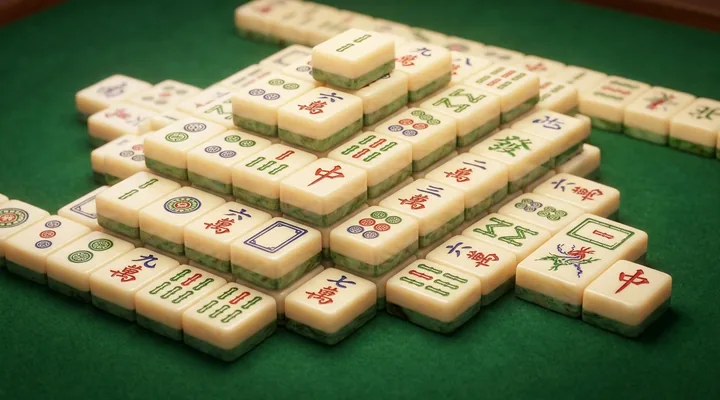
Goal
Remove all 144 tiles by matching free pairs. Clear the whole Turtle and you win; the faster you do it, the higher you rank.
Free tiles
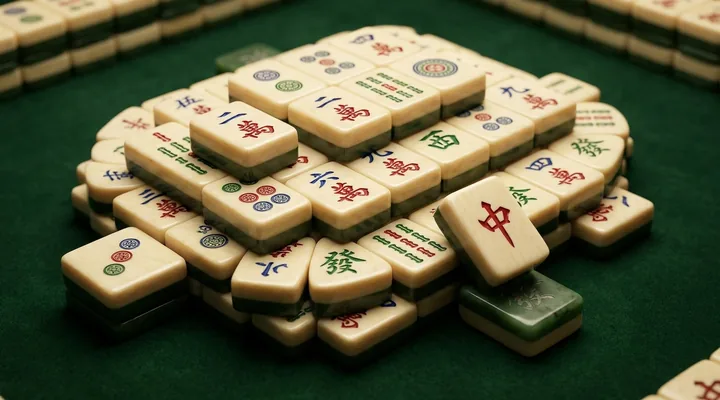
A tile is free when nothing is stacked on top of it and it has an open edge on its left or right side. Only free tiles can be selected.
Matching
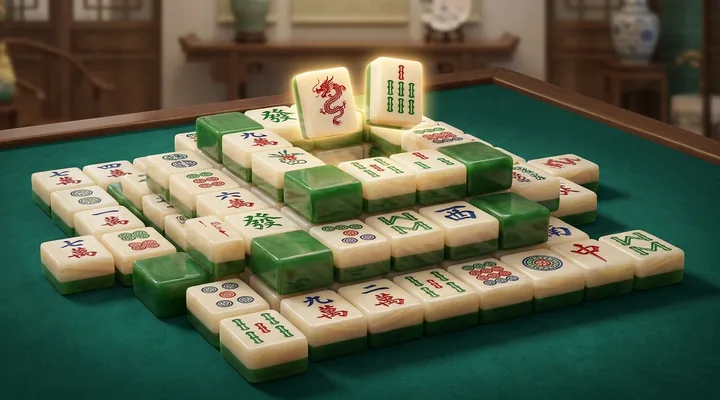
Tap one free tile to select it, then tap a second matching free tile to remove the pair. Both tiles must show the same face.
Flowers and seasons
The four Flower tiles all match each other, and the four Season tiles all match each other - they are the only tiles that do not need an exact twin.
Winning and shuffling
Keep uncovering the buried center as you clear the wings. If you run out of moves, use Shuffle to redistribute the remaining tiles and keep going.
History of Turtle Mahjong
Mahjong itself is a four-player game that took shape in mid-19th-century China, but the single-player tile-matching puzzle most people now call 'Mahjong' is much younger. It was created in 1981 by Brodie Lockard as a computer game named Mahjong, later published widely as Shanghai, and it borrowed the beautifully engraved tiles of the parlor game without any of its scoring, melds or betting.
The Turtle - a long central ridge of tiles flanked by two sloping wings and topped by a single crowning tile - was the default layout in those early releases, and it became the image the whole genre is remembered by. When later versions shipped with hundreds of alternative shapes, the Turtle stayed the one players returned to.
Today the Turtle is the layout almost every mahjong site opens with, including this one. Its balance of open edges and a stubborn buried center is what makes it both welcoming to newcomers and satisfying to speed-solve, four decades after it first appeared on a monochrome monitor.
How to Clear Turtle: Strategy
💡 Top tip: Always ask 'what does this pair unlock?' before you match - a pair that frees two buried tiles is worth far more than a pair that clears nothing.
Winning tips, in order of importance
- Clear the long top row and the two single end tiles early; they block the widest part of the shell and open up dozens of moves.
- When all four copies of a tile are free, remove both pairs right away - there is no reason to leave a fully open match on the board.
- When only two of a tile's four copies are free, pause: matching the wrong two can strand the other pair under the pile.
- Work from the outside in, peeling the edges so the tall center column has somewhere to collapse into.
- Save Flowers and Seasons as flexible 'get out of jail' matches, since any flower pairs with any flower and any season with any season.
- Use Hint only when you are truly stuck - learning to see free pairs yourself is what makes your times drop.
Advanced tactics for Turtle
- Track the 'twins under twins' problem: if the two remaining copies of a tile sit on top of each other in the same column, one must be freed and removed before the other, so plan the unstacking order early.
- Prioritize tiles whose removal frees the central spine of the Turtle; the middle stack is the last thing to open and the most common cause of a dead board.
- Count matched pairs against the layout as you go - if you are past halfway and the center is still sealed, slow down and stop spending easy edge pairs.
- Treat the free-standing tile on the far right as a key: it locks the end of the top row, so freeing its partner early is often the difference between a clear and a jam.
- When two different matches are available, take the one that keeps the most future options open rather than the one that looks tidiest.
- Keep at least one 'safety pair' visible and unmatched as insurance; burning every open match at once can leave you with only buried tiles.
- If you must shuffle, do it before the board is nearly empty - a shuffle with more tiles left gives the solver more room to rebuild a path to a clear.
Common Turtle mistakes to avoid
- Grabbing the first pair you see instead of the pair that frees the most tiles - always ask what a match unlocks before you take it.
- Leaving the long top row for later - it caps the widest part of the shell, so clearing it early opens dozens of moves at once.
- Matching the wrong two copies when only two of a tile's four are free - you can bury the other pair under the pile for good.
- Spending Flowers and Seasons early - keep those flexible matches in reserve for when exact twins are trapped in the center.
Turtle Variations
The Turtle (Dragon)
The full 144-tile classic you play here. Some sets label the identical shape the Dragon; the tiles and rules are the same.
Ridge-first Turtle
A house strategy rather than a new shape: clear the top ridge and its end tiles before touching the wings, which tends to open the whole board fastest.
Timed Turtle
The daily-challenge and leaderboard version, where the same solvable Turtle is dealt to everyone and the fastest clear wins.
Race Turtle
The multiplayer version: two players get the identical Turtle and race to clear it first, with a live progress bar for each side.
Relaxed Turtle
Same layout with sound off and no timer pressure - a common way to enjoy the Turtle purely as a calm matching puzzle.
Turtle FAQ
How many tiles are in Turtle Mahjong?
The Turtle uses a full mahjong set of 144 tiles arranged in 72 matching pairs, stacked up to five layers high in the classic turtle-shell shape.
Is Turtle Mahjong always winnable?
Every Turtle deal on Mahjong.now is generated in a solvable order, so a path to clear the board always exists. Winning still takes good tile-freeing decisions, and a careless match early can paint you into a corner.
What makes a tile 'free' in the Turtle?
A tile is free when no tile covers any part of its top and at least one of its left or right long edges is completely open. Free tiles are the only ones you can select and match.
Why is it called the Turtle?
The layout's raised, rounded silhouette - a long central ridge flanked by sloping wings - looks like a turtle's shell, which is where the classic name comes from. Some sets call the same shape the Dragon.
How do I win the Turtle faster?
Open the top row and the buried center first, remove fully-free foursomes on sight, and avoid stranding the second pair of a tile under the pile. Speed comes from unlocking many tiles per match, not from matching quickly.
What do Flowers and Seasons do?
They are bonus tiles: any of the four Flowers matches any other Flower, and any of the four Seasons matches any other Season. They give you flexible pairs when exact twins are buried.
What happens if I run out of moves?
If no matching free pair is left, use the Shuffle button to redistribute the remaining tiles into a fresh solvable arrangement, or Undo your recent matches and try a different order.
Is the Turtle good for beginners?
Yes. It is wide and open, so there are usually several matches available, which makes it the friendliest place to learn how free tiles and matching work before moving to harder layouts.
Does undo count against me?
No. Undo is a normal part of solving a Mahjong Solitaire layout and there is no penalty for it. Your time keeps running, so relying on it heavily can still cost you on the leaderboard.
Can I play the Turtle on my phone?
Yes. The board scales to any screen and tiles respond to taps, so the Turtle plays comfortably on phones and tablets with no download or signup.
Still have a question about Turtle Mahjong? Browse the full Mahjong FAQ, look up a term like free tile or classic layouts in the Mahjong glossary, or compare Turtle with the other layouts in the rules for every Mahjong layout.
Last updated .
More Mahjong Layouts
Why Mahjong.now?
- Always solvable. Every layout is generated in a valid clearable order, so a lost board is always a puzzle you could have cracked.
- Eleven layouts. From the friendly Turtle and Cat to the deep Tower and balanced Cross, there is a shape for every mood.
- Free and instant. No download, no signup, no ads getting in the way of the tiles. Just open the page and play.
- Compete or relax. Chase leaderboard times and race friends live, or turn off the timer pressure and unwind.
Mahjong.now FAQ
Is Mahjong.now free?
Yes. Every layout, the daily challenge, the leaderboard, and online multiplayer are free to play in your browser, with no download and no signup. An optional free account only adds cross-device stats and a saved name on the leaderboard.
Do I need to download or install anything?
No. Mahjong.now runs entirely in your web browser on desktop, tablet, and phone. You can add it to your home screen so it opens like an app, but there is nothing to install and nothing to update.
Is Mahjong.now safe to use?
Yes. The site uses HTTPS, never sells personal data, and lets you play everything as a guest. Your wins and stats are saved in your own browser, not on a server, unless you choose to sign in and sync them across devices.
What makes Mahjong.now different from other mahjong sites?
Alongside 11 layouts and a daily challenge, Mahjong.now offers real-time multiplayer races, where you and a friend clear the identical board live on separate devices, plus cross-device stats. Almost no other mahjong site has head-to-head play.
Who made Mahjong.now?
Mahjong.now is an independent, ad-light free mahjong site built for people who actually play. You can read more on the About page and reach the team through the contact form.
Types of Mahjong Solitaire
"Mahjong" here does not mean the four-player game with draws and discards - it means Mahjong Solitaire, the single-player tile-matching puzzle. Every board uses the same short rulebook (remove matching pairs of free tiles until the table is clear), so what really separates the layouts is their shape. That shape decides how many tiles are free at once, how deeply they hide, and whether a solve feels like a relaxing break or a real test. On Mahjong.now the layouts fall into three families. The classic layouts are the balanced, symmetric mounds the genre is remembered for, led by the Turtle. The picture layouts sculpt the tiles into recognizable shapes - a dragon, a butterfly, a cat - so a solve becomes unwinding a themed image. The challenge layouts stack tall or pack tight, hiding more tiles and leaving fewer free, for players who already read the free-tile rule fluently. Knowing which family a board belongs to tells you almost right away whether it will be a calm five minutes or a puzzle that makes you plan several moves ahead.
Classic Layouts
The classics are the shapes most people picture when they hear "Mahjong Solitaire" - wide, symmetric mounds that balance open edges against a stubborn buried center. They range from the famously friendly Turtle to the tighter Pyramid and the walled Fortress, and they are the best place to learn the free-tile rule.
- Turtle Mahjong - The classic mahjong pyramid - Match free tiles and clear all 144. Turtle Mahjong is the layout that made Mahjong Solitaire famous: a wide, symmetric mound of 144 tiles stacked up to five layers high, said to resemble a turtle's shell. (Easy to learn, 144 tiles, 4 layers.)
- Pyramid Mahjong - A four-sided pyramid of tiles - Only the edges are ever free. Pyramid Mahjong stacks its tiles into a neat four-sided pyramid that rises to a single tile at the peak. (Moderate, 120 tiles, 4 layers.)
- Fortress Mahjong - Thick outer walls guard a stacked keep - Breach it to win. Fortress Mahjong builds its tiles into a walled stronghold: a thick rectangular rampart of stacked tiles surrounding a raised central keep. (Moderate, 128 tiles, 3 layers.)
Picture Layouts
Picture layouts sculpt the tiles into recognizable creatures and forms. They tend to keep more open edges available, so they feel generous, but each hides a themed core - a dragon's spine, a butterfly's body, a spider's shell - that rewards clearing the shape evenly from its edges inward.
- Dragon Mahjong - A long, coiling dragon of tiles - Free its head and tail to win. Dragon Mahjong lays its 144 tiles out as a long, sinuous dragon - a stretched body with a raised head, a tapering tail and stacked ridges running down its spine. (Moderate, 144 tiles, 4 layers.)
- Butterfly Mahjong - Two symmetric wings of tiles - Balance both to clear the board. Butterfly Mahjong spreads its tiles into two broad, mirror-image wings joined by a slim central body. (Moderate, 136 tiles, 3 layers.)
- Cat Mahjong - A curled cat of tiles - Ears, body and tail all in play. Cat Mahjong arranges its tiles into a curled, contented cat - pointed ears, a rounded body, tucked paws and a sweeping tail. (Easy to moderate, 120 tiles, 3 layers.)
- Spider Mahjong - A body and eight radiating legs - Free the legs to reach the core. Spider Mahjong builds a compact central body with eight legs radiating outward, each leg a short run of tiles reaching across the table. (Moderate to hard, 112 tiles, 3 layers.)
Challenge Layouts
Challenge layouts trade openness for height and density. Tall towers, load-bearing gates and balanced crosses leave far fewer tiles free at any moment, so every match has to count. These are the boards to reach for once the friendly layouts feel easy.
- Tower Mahjong - A tall stacked tower - Deep layers, few free tiles, big payoff. Tower Mahjong stacks its tiles up into a tall, narrow tower - far more layers than a classic layout, with a small footprint. (Hard, 112 tiles, 7 layers.)
- Gate Mahjong - A grand arched gateway of tiles - Open the arch to clear it. Gate Mahjong builds a grand ceremonial gateway: two tall pillars of stacked tiles supporting a wide arch across the top, framing an open central passage. (Hard, 128 tiles, 4 layers.)
- Crab Mahjong - A broad shell, claws and legs - Pincers first, then the shell. Crab Mahjong sculpts its tiles into a broad-shelled crab with two big front claws and a fan of side legs. (Moderate to hard, 128 tiles, 3 layers.)
- Cross Mahjong - Four stacked arms meeting at a raised center - Balance to win. Cross Mahjong arranges its tiles into a bold plus-sign: four equal arms of stacked tiles meeting at a raised central hub. (Hard, 100 tiles, 3 layers.)
Which Mahjong layout should I play?
Not sure where to start? Match the board to your mood:
New to Mahjong Solitaire
Begin with the Turtle or the open Cat. Both keep many tiles free at once, teach the free-tile rule, and clear often enough to keep you hooked.
A calm, relaxing solve
Play the Dragon or Butterfly. Their open shapes rarely run dry of moves, so you can unwind without getting boxed in.
A structured, thinking solve
Try the Fortress or Gate. Both are structures you take apart in the right order, so sequence matters more than raw scanning.
The hardest challenge
If you want to be humbled, take on the tall Tower or the balanced Cross - two of the toughest shapes, where a careless early match can strand a buried pair.
Play with a friend
Mahjong Solitaire does not have to be solitary. Jump into online multiplayer and race someone head-to-head on the exact same board, live.
Ready to dig deeper? Our complete rules hub explains every layout above in full - the goal, the legal moves and strategy - and if you would rather test yourself against everyone else, take on today's daily challenge, a single shared board that resets at midnight UTC.