Tower Mahjong, deep layers and few free tiles
A tall stacked tower - Deep layers, few free tiles, big payoff.How to Play Tower Mahjong
In a nutshell: A tall stacked tower - Deep layers, few free tiles, big payoff. You clear 112 tiles stacked up to 7 layers high, it's rated hard, and around 45% clear - deep stacking makes this a real test.
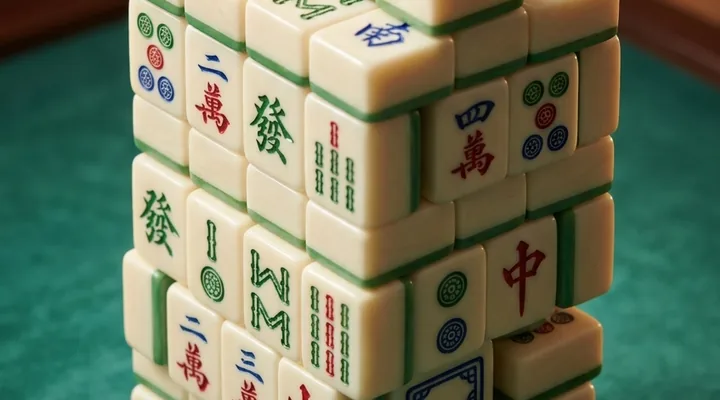
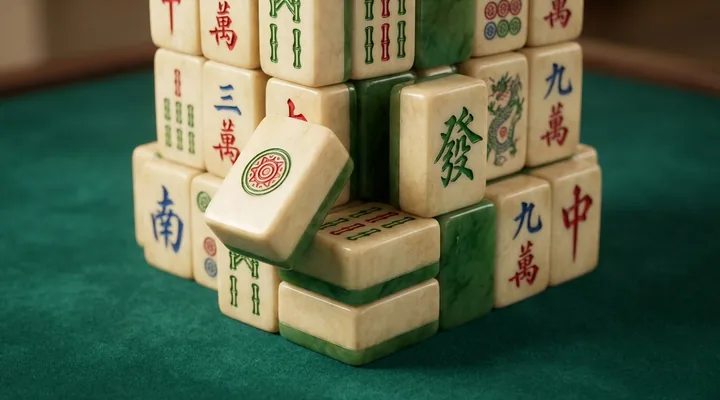
Tower Mahjong stacks its tiles up into a tall, narrow tower - far more layers than a classic layout, with a small footprint. That vertical build is the whole challenge: only the tiles around the rim of each level are free, deeply buried tiles wait under many others, and a single wrong match can strand a pair near the base for the rest of the game. There are fewer moves available at any moment than in a wide layout, so every match has to count. The rules are the standard Mahjong Solitaire rules - match identical free tiles, Flowers and Seasons matching within their groups - but the Tower rewards careful, layer-by-layer planning over quick scanning. Every Tower on Mahjong.now is generated solvable, so even this deep stack can always be brought down by a player who reads it from the top.
Tower at a glance
| Goal | Bring the whole tower down by matching free tiles in pairs, level by level, until the base is clear. |
|---|---|
| Tiles | 112 mahjong tiles (56 matching pairs) |
| Layers | Stacked up to 7 layers high |
| Difficulty | Hard |
| Chance of clearing | Around 45% clear - Deep stacking makes this a real test |
| Family | Challenge Layouts |
Step by step
Goal
Bring the whole tower down by matching free tiles in pairs, level by level, until the base is clear.
Deep layers
The tower is many tiles tall, so only the rim tiles of each level are free. Deeply buried tiles wait until the levels above them are removed.

Matching
Tap a free tile then a matching free tile. The top of the tower and the outer rim of each level open first.
Base tiles
Tiles near the base stay covered longest, so avoid stranding both copies of a tile deep in the stack.
If it locks up
When no pair is free, Shuffle redistributes the remaining tiles, and Undo rewinds a match so you can descend in a different order.
History of Tower Mahjong
As Mahjong Solitaire matured, designers began pushing the third dimension. Most classic layouts are wide and only a few tiles tall; tower and 'high-rise' layouts flipped that, trading footprint for height to create a harder, more claustrophobic puzzle.
The design lesson of a tower is scarcity. By stacking deep on a small base, it sharply limits how many tiles are free at once, so the player cannot rely on always having an easy match somewhere. Every pair has to open new ground, and mistakes are expensive because a buried tile may be many layers down.
On Mahjong.now the Tower anchors the Challenge family. It is not the layout to learn on, but for players who have mastered the free-tile rules it is the purest test of planning a descent from the top down.
How to Clear Tower: Strategy
💡 Top tip: Descend evenly around the whole rim of each level - digging one side turns the tower into an overhang that strands tiles beneath it.
Winning tips, in order of importance
- Take the top of the tower first; it unlocks the widest access to the levels below.
- With fewer moves available, never spend a match that clears nothing - each pair should expose new rim tiles.
- Clear fully-free foursomes on sight, because in a deep stack a stranded pair is very hard to recover.
- Trace vertical blocking carefully - in a tall tower a single tile can pin a long column beneath it.
- Save Flowers and Seasons as flexible pairs for the late game, when exact twins are buried near the base.
- Use Hint when the rim genuinely stalls; the Tower punishes blind matching more than any other layout.
Advanced tactics for Tower
- Plan the tower as a stack of shrinking rings; keep each ring retreating uniformly so no overhang forms to trap the ring below.
- The base holds the last-freed tiles, so mentally reserve their partners - do not remove one copy of a base tile's twin from an upper level if it leaves the other unreachable.
- In a narrow footprint, two copies of a tile often sit in the same column; identify these stacked twins early and free the upper one with a plan for the lower.
- Because free tiles are scarce, count every remaining pair against open rim positions and stop trading easy top pairs if the base is still sealed.
- When two matches exist, always take the one that opens the most new rim over the one that only clears a tip.
- Keep at least one reserve pair alive at all times; in a deep stack, running dry with buried twins is the usual way a Tower is lost.
- Shuffle earlier than you would on an open layout - a deep stack gives the solver little room, so a late shuffle may not find a clear.
Common Tower mistakes to avoid
- Digging one side of the tower down - that creates an overhang that buries tiles you can no longer reach, so descend the whole rim evenly.
- Spending a match that clears no new rim - in a deep stack every pair has to open new ground, because moves are scarce.
- Stranding both copies of a tile deep in the stack - a buried pair is very hard to recover, so clear fully-free foursomes on sight.
- Shuffling too late - a deep tower gives the solver little room, so shuffle earlier than you would on an open layout.
Tower Variations
Classic Tower
The tall, small-footprint stack you play here, rising many layers high.
Twin Towers
A house variant with two shorter towers side by side, giving twice the rim to work but a bridge of shared tiles between them.
Spiral Tower
A version whose levels rotate slightly as they rise, so the free rim shifts around the tower as you descend.
Daily Tower
The shared daily version - the same solvable Tower for everyone, ranked on time.
Race Tower
The multiplayer version where two players topple identical Towers and race to finish first.
Tower FAQ
How many tiles are in Tower Mahjong?
The Tower uses 112 tiles in 56 pairs, but stacks them up to seven layers high in a small footprint, which is what makes it hard.
Why is the Tower so difficult?
Its deep vertical stacking means only the rim tiles of each level are free, so far fewer moves are available at once and a single wrong match can strand a pair near the base.
Where should I start on the Tower?
At the very top, then descend evenly around the rim of each level so no overhang forms to trap the tiles below.
Is every Tower solvable?
Yes. Each Tower deal is generated in a solvable order, so even this deep stack can always be cleared with the right sequence of matches.
What is the biggest Tower mistake?
Digging one side down while the rest stays tall. That creates an overhang that buries tiles you can no longer reach, so descend the whole rim evenly.
How do Flowers and Seasons help here?
Any Flower matches any Flower and any Season matches any Season, so save them as flexible late-game pairs when exact twins are buried deep in the stack.
What if I run out of moves?
Use Shuffle to redistribute the remaining tiles - but do it earlier than on open layouts, because a deep stack gives the solver little room to rebuild a path.
Is the Tower good for beginners?
Not as a first layout. Start with the Turtle or Cat to learn the free-tile rules, then take on the Tower once you can read vertical blocking confidently.
Does a faster clear score higher?
Yes, and clearing a hard layout like the Tower quickly is a genuine achievement on the leaderboard.
Can I play the Tower on mobile?
Yes. The layout scales to your screen and tiles respond to taps, though the deep stacking is easiest to read on a larger display.
Still have a question about Tower Mahjong? Browse the full Mahjong FAQ, look up a term like free tile or challenge layouts in the Mahjong glossary, or compare Tower with the other layouts in the rules for every Mahjong layout.
Last updated .