Dragon Mahjong, head to tail
A long, coiling dragon of tiles - Free its head and tail to win.How to Play Dragon Mahjong
In a nutshell: A long, coiling dragon of tiles - Free its head and tail to win. You clear 144 tiles stacked up to 4 layers high, it's rated moderate, and around 75% clear when you work the long body from both ends.
Dragon Mahjong lays its 144 tiles out as a long, sinuous dragon - a stretched body with a raised head, a tapering tail and stacked ridges running down its spine. The elongated shape means most tiles have an open left or right edge somewhere along the body, so there is usually a move to find, but the raised spine hides pairs that only open as you thin the creature down. It is one of the most approachable Picture layouts: the rules never change - match identical free tiles, with Flowers and Seasons matching within their groups - but the theme turns a solve into something that feels like carefully unwinding a dragon from head to tail. Every Dragon on Mahjong.now is generated solvable, so the coil can always be undone with the right order of matches.
Dragon at a glance
| Goal | Clear the entire dragon - head, body, spine and tail - by matching free tiles in pairs until the creature is gone. |
|---|---|
| Tiles | 144 mahjong tiles (72 matching pairs) |
| Layers | Stacked up to 4 layers high |
| Difficulty | Moderate |
| Chance of clearing | Around 75% clear when you work the long body from both ends |
| Family | Picture Layouts |
Step by step
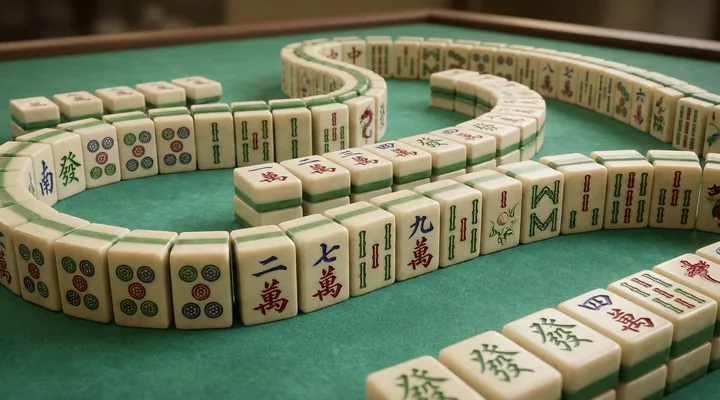
Goal
Clear the entire dragon - head, body, spine and tail - by matching free tiles in pairs until the creature is gone.
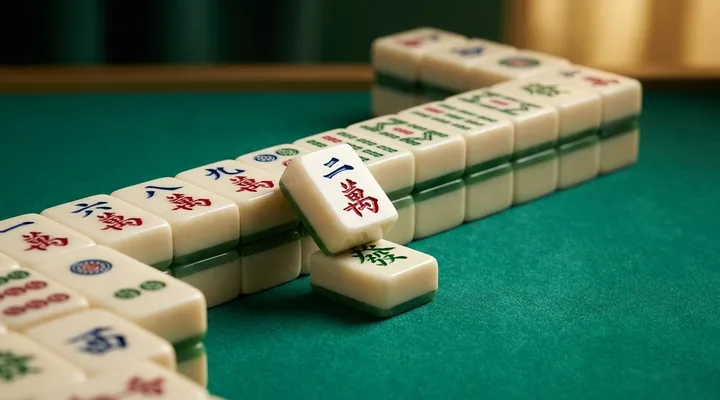
The long body
Because the dragon is stretched out, most body tiles have an open side, so there are usually several matches available at once along its length.
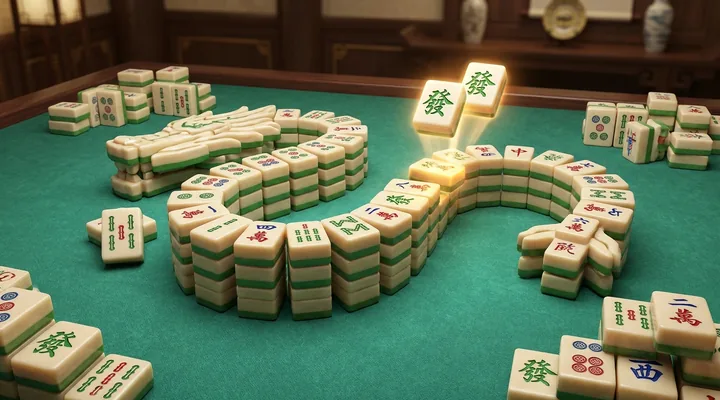
Matching
Tap a free tile then a matching free tile to remove them. The head and tail tips are almost always free first.
The spine
Stacked tiles run along the dragon's back and stay covered until you clear the tiles beside them, so thin the body to expose the ridge.
If it coils shut
When no pair is free, Shuffle redistributes the remaining tiles and Undo rewinds a match so you can open the body differently.
History of Dragon Mahjong
The dragon is the emblem of mahjong - one of its three Dragon tiles, and a recurring motif on the tiles themselves - so it was inevitable that Mahjong Solitaire designers would build a layout in its shape. Long, ridged 'dragon' and 'serpent' layouts appear across the genre's many tile-shape packs.
What makes a dragon shape work as a puzzle is its length. Stretching the tiles into a body keeps open edges available almost everywhere, so the layout feels generous, while the raised spine gives it a genuine core to conquer. It is the classic 'easy to enjoy, satisfying to master' picture layout.
On Mahjong.now the Dragon is the gateway to the Picture family: recognizably themed, gentle enough to relax with, but still hiding a spine that rewards a player who unwinds it from both ends.
How to Clear Dragon: Strategy
💡 Top tip: Work the head and tail toward the middle - both ends are open first, and squeezing from both sides exposes the spine fastest.
Winning tips, in order of importance
- Do not strip one section of body bare while the rest stays tall; even progress keeps open edges available everywhere.
- Clear the spine tiles as soon as the body beside them thins, before their partners get buried further along the coil.
- Match fully-free foursomes immediately so no copy ends up trapped under the raised back.
- Follow blocking chains along the body - a single stubborn tile can pin a long run of the spine.
- Keep Flowers and Seasons in reserve as flexible pairs for when a needed twin is still under the ridge.
- Use Hint only when a stretch of body genuinely stalls; the long shape usually hides an available pair you can find yourself.
Advanced tactics for Dragon
- Picture the dragon as two halves meeting at the belly; retiring both halves at the same pace makes the central spine collapse cleanly at the end.
- The raised spine is where twins hide directly above one another - identify those stacked pairs early and plan which to free first.
- Spend head and tail pairs in a way that leaves the body open behind them, rather than clearing a tip and stranding the neck.
- Count remaining pairs against the exposed body; if the spine is still sealed past halfway, ease off the easy end pairs.
- When two matches are available, prefer the one that lifts a spine tile over the one that only trims the outline.
- Keep one reserve pair along the body so a shuffle is a choice, not a forced last resort.
- If you shuffle, do it while a good length of body remains - the solver needs that room to re-route around the spine.
Common Dragon mistakes to avoid
- Stripping one section of the body bare while the rest stays tall - even progress keeps open edges available along the whole dragon.
- Leaving the raised spine for last - clear spine tiles as the body beside them thins, before their twins slide out of reach.
- Working only one end - squeeze from the head and the tail together to expose the spine fastest.
- Clearing a tip and stranding the neck behind it - spend end pairs so the body stays open behind them.
Dragon Variations
Coiled Dragon
The classic long-bodied dragon you play here, with a raised head, spine and tapering tail.
Twin Dragons
A house variant that splits the tiles into two shorter dragons facing each other, doubling the number of open ends.
Serpent
A slimmer, longer version with a single-tile-wide body and a lower spine, for a faster, more open solve.
Daily Dragon
The shared daily version - the same solvable Dragon for everyone, ranked on time.
Race Dragon
The multiplayer version where two players unwind identical Dragons and race to finish first.
Dragon FAQ
How many tiles are in Dragon Mahjong?
The Dragon uses the full 144-tile set in 72 pairs, laid out as a long coiling body with a raised head, spine and tail.
Is the Dragon easier than the Turtle?
It is a similar difficulty with a friendlier feel - its stretched shape keeps more open edges available along the body, so you rarely run completely dry of moves.
What is the hardest part of the Dragon?
The raised spine down its back. Those stacked tiles stay covered until you thin the body beside them, and they hold the twins that decide a late-game clear.
Where should I start on the Dragon?
At the head and the tail. Both tips are open first, and working inward from both ends is the quickest way to expose the spine.
Is every Dragon solvable?
Yes. Each Dragon deal is generated in a solvable order, so the whole creature can always be cleared with the right sequence of matches.
How do Flowers and Seasons work?
Any Flower matches any other Flower and any Season matches any other Season, so they act as flexible pairs mixed into the dragon's body.
What do I do if I get stuck?
Use Shuffle to redistribute the remaining tiles into a solvable arrangement, or Undo to rewind and open a different section of the body.
Does a faster clear score higher?
Yes. Your time sets your leaderboard rank and a quicker clear scores more, though nothing forces you to rush a single game.
Is the Dragon a good layout for practice?
Yes. Its open, forgiving body makes it a comfortable place to practice reading blocking chains before you tackle tighter Challenge layouts.
Can I play the Dragon on mobile?
Yes. The long layout scales to fit your screen and tiles respond to taps, so it plays well on phones and tablets.
Still have a question about Dragon Mahjong? Browse the full Mahjong FAQ, look up a term like free tile or picture layouts in the Mahjong glossary, or compare Dragon with the other layouts in the rules for every Mahjong layout.
Last updated .