Pyramid Mahjong, free only at the edges
A four-sided pyramid of tiles - Only the edges are ever free.How to Play Pyramid Mahjong
In a nutshell: A four-sided pyramid of tiles - Only the edges are ever free. You clear 120 tiles stacked up to 4 layers high, it's rated moderate, and roughly 70% clear once you learn to work the corners.
Pyramid Mahjong stacks its tiles into a neat four-sided pyramid that rises to a single tile at the peak. Because each layer sits centered on the one below, only the tiles around the outer edge of every step are ever free, which makes the Pyramid a more disciplined puzzle than the sprawling Turtle. You still match identical free tiles two at a time, but here the board funnels you toward its four corners and sloping sides, and the tiles buried directly under the peak are the last to open. It is a clean, symmetric layout that teaches you to read stacks vertically - to see which tile is trapping which - rather than just scanning a wide field for easy pairs. Every Pyramid on Mahjong.now is built to be solvable, so the challenge is always the order, never the luck.
Pyramid at a glance
| Goal | Dismantle the entire pyramid by matching free tiles in pairs until every tile, right up to the peak, is gone. |
|---|---|
| Tiles | 120 mahjong tiles (60 matching pairs) |
| Layers | Stacked up to 4 layers high |
| Difficulty | Moderate |
| Chance of clearing | Roughly 70% clear once you learn to work the corners |
| Family | Classic Layouts |
Step by step
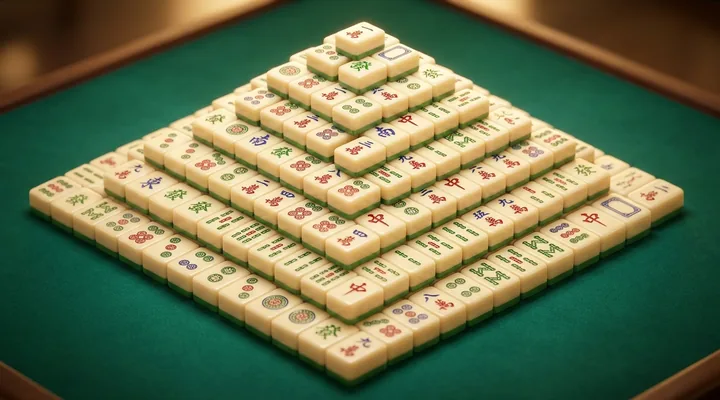
Goal
Dismantle the entire pyramid by matching free tiles in pairs until every tile, right up to the peak, is gone.
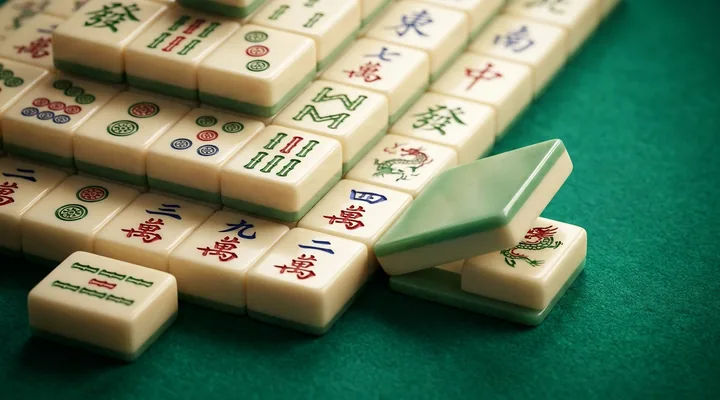
Reading the steps
Each layer is smaller than the one below it, so the free tiles are the ones around the outside edge of each step where a side is open.
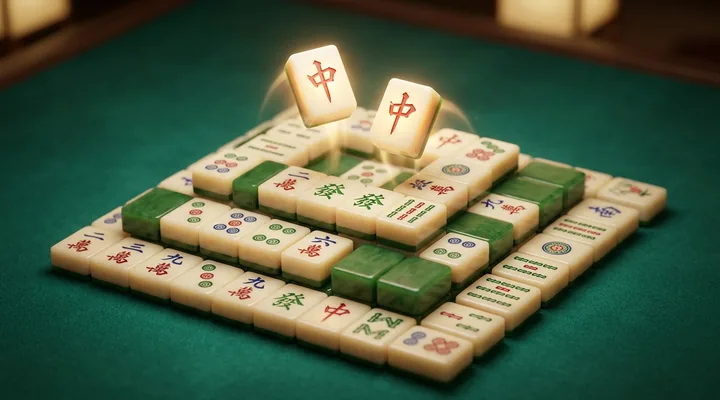
Matching
Select a free tile, then a matching free tile, to remove both. Corner tiles are usually free first because two of their sides are exposed.
The buried core
Tiles directly beneath the upper steps stay locked until you peel the layers above them, so plan which corner to open first.
Getting unstuck
If no pair is available, Shuffle reshuffles the remaining tiles into a solvable arrangement, and Undo lets you rewind a match you regret.
History of Pyramid Mahjong
The pyramid is one of the oldest alternative shapes in Mahjong Solitaire, appearing in the earliest waves of layout packs that shipped after the original 1981 game. Its appeal is its clarity: a perfectly symmetric solid where the rules of covering and freeing tiles are laid out for the eye to read.
Because a centered pyramid exposes far fewer tiles than a flat or winged layout, designers used it to give players a tighter, more thoughtful puzzle without changing a single rule. It became a favorite for teaching the vertical logic of the game - the idea that a tile's freedom depends on exactly what is stacked around and above it.
On Mahjong.now the Pyramid keeps that teaching role. It is the natural next step after the Turtle: same tiles, same matching, but a shape that makes you plan your descent instead of grazing on easy pairs.
How to Clear Pyramid: Strategy
💡 Top tip: Attack the four corners first - a corner tile has two open sides, so it is almost always free and often unlocks the tile beneath it.
Winning tips, in order of importance
- Peel the pyramid evenly on all four sides instead of digging one face; a lopsided pyramid strands tiles under the tall side.
- Remove the peak tile's neighbors early so the crowning tile and the core below it can come free while you still have matches in hand.
- Match fully-free foursomes immediately rather than leaving an open pair for later, when its partners may be buried.
- Watch vertical stacks: a tile can only be freed after the tile resting on its edge is gone, so trace the chain before you commit.
- Hold Flowers and Seasons back as flexible matches for moments when the exact twins you need are still trapped.
- Use Hint sparingly - on a symmetric layout like this, learning to spot the open edges yourself pays off quickly.
Advanced tactics for Pyramid
- Think of the Pyramid as four triangular faces sharing a core: keep all four faces retreating at the same rate so the center collapses last, together.
- Identify tiles that are 'double-blocking' - resting where they pin two lower tiles at once - and prioritize freeing them, because they cause the worst jams.
- Because layers are centered, the same tile face can appear once on an edge and once buried in the core; spend the edge copy in a way that leaves a route to the buried one.
- Count your remaining pairs against open positions; if free matches are drying up before the upper steps are cleared, slow down and stop trading easy corner pairs.
- When two matches are on offer, choose the one that exposes a new layer rather than the one that only tidies the current edge.
- Keep a spare open pair in reserve as insurance against a shuffle, especially once you are down to the top two steps.
- If you shuffle, do it with the upper steps still intact - a shuffle late, with only the core left, has little room to build a fresh path.
Common Pyramid mistakes to avoid
- Digging one face of the pyramid while the others stay tall - an uneven peel strands tiles under the high side.
- Ignoring the corners - each corner tile has two open sides and usually frees the tile beneath it, so open all four first.
- Clearing the peak's neighbors too late - the crowning tile and the core under it only free if you reach them while matches remain.
- Taking a pair that only tidies an edge over one that exposes a whole new layer - always prefer the match that opens the pyramid.
Pyramid Variations
Square Pyramid
The standard centered four-sided pyramid you play here, tapering to a single peak tile.
Truncated Pyramid
A flatter house variant that stops a layer short of a single peak, leaving a small plateau on top and a gentler solve.
Corner-first Pyramid
A strategy variant in name only: open all four corners before any face, the fastest reliable way to unlock the core.
Daily Pyramid
The shared daily version where everyone gets the same solvable Pyramid and competes on time.
Race Pyramid
The two-player multiplayer version - identical layout, first to clear it wins.
Pyramid FAQ
How many tiles does Pyramid Mahjong use?
This Pyramid is built from 120 tiles in 60 matching pairs, stacked into centered square layers that taper to a single tile at the top.
Why can I only reach the edge tiles?
Each layer sits centered on the one below, so tiles in the middle of a step are covered on their inner sides. Only tiles on the outer rim of a step have the open left or right edge that makes them free.
What is the hardest part of the Pyramid?
The tiles directly under the peak. They are covered until you clear the steps above them, so the puzzle often comes down to whether you opened the right corners early enough to reach the core.
Is Pyramid Mahjong harder than the Turtle?
A little. It offers fewer free tiles at any moment because of its tight, centered stacking, so it rewards planning your unstacking order more than the wide-open Turtle does.
Is every Pyramid solvable?
Yes. Each Pyramid deal is generated in a solvable order, so a clear is always possible with the right sequence of matches.
Where should I start on the Pyramid?
The four corners. They have two exposed sides, are almost always free, and clearing them begins peeling every face of the pyramid at once.
What do I do when I get stuck?
Use Shuffle to redistribute the remaining tiles into a fresh solvable layout, or Undo to rewind and try opening a different corner first.
Do Flowers and Seasons appear in the Pyramid?
Yes, the full tile set is used, so the four Flowers (all matching each other) and four Seasons (all matching each other) are mixed into the stack as flexible pairs.
Does the timer affect my score?
Your clear time sets your rank on the leaderboard, and a faster clear scores higher, but there is no time limit forcing you to rush a single game.
Can I play the Pyramid on mobile?
Yes. The pyramid scales to fit your screen and every tile responds to a tap, so it plays well on phones and tablets.
Still have a question about Pyramid Mahjong? Browse the full Mahjong FAQ, look up a term like free tile or classic layouts in the Mahjong glossary, or compare Pyramid with the other layouts in the rules for every Mahjong layout.
Last updated .