Butterfly Mahjong with two matching wings
Two symmetric wings of tiles - Balance both to clear the board.How to Play Butterfly Mahjong
In a nutshell: Two symmetric wings of tiles - Balance both to clear the board. You clear 136 tiles stacked up to 3 layers high, it's rated moderate, and roughly 70% clear when both wings are worked in step.
Butterfly Mahjong spreads its tiles into two broad, mirror-image wings joined by a slim central body. The symmetry is the whole puzzle: the same tile faces tend to sit in matching spots on the left and right wings, so you often clear pairs across the body from one wing to the other. Working the wings evenly keeps the butterfly balanced and the open edges flowing; let one wing get ahead and the other can jam. The rules are the familiar Mahjong Solitaire rules - match identical free tiles, Flowers and Seasons matching within their own groups - but the mirrored layout makes it feel like folding the board in half as you solve. Every Butterfly on Mahjong.now is generated solvable, so a balanced, patient player can always bring both wings down.
Butterfly at a glance
| Goal | Clear both wings and the body of the butterfly by matching free tiles in pairs until every tile is gone. |
|---|---|
| Tiles | 136 mahjong tiles (68 matching pairs) |
| Layers | Stacked up to 3 layers high |
| Difficulty | Moderate |
| Chance of clearing | Roughly 70% clear when both wings are worked in step |
| Family | Picture Layouts |
Step by step
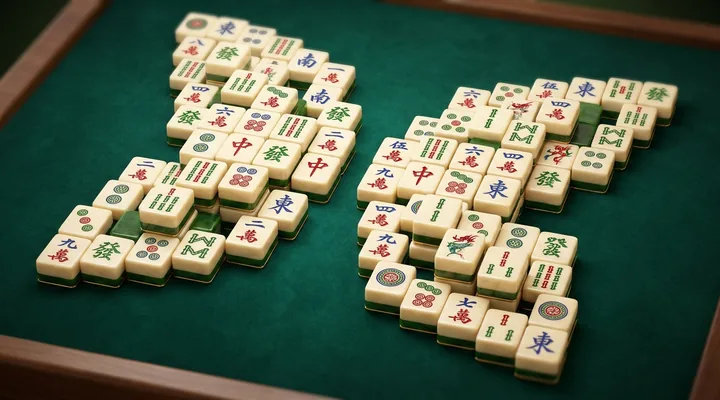
Goal
Clear both wings and the body of the butterfly by matching free tiles in pairs until every tile is gone.
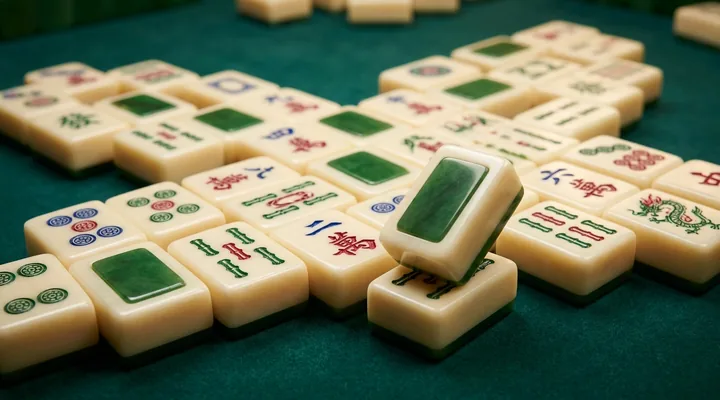
The wings
The layout is mirror-symmetric, so free tiles usually appear in matching positions on the left and right wings - and you can match a pair across the body.
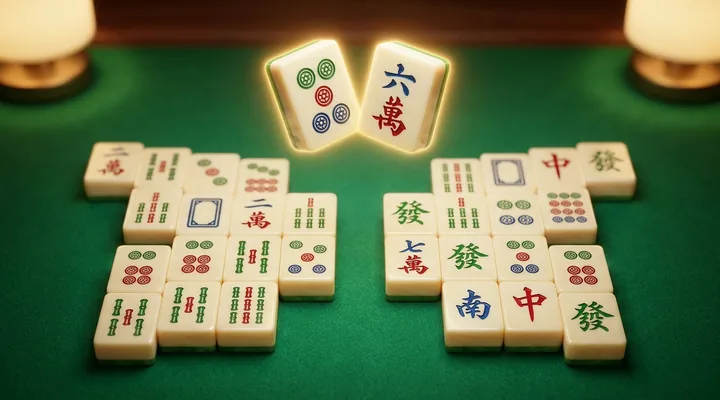
Matching
Tap a free tile then a matching free tile. The outer wing edges and the wingtips are open first.
The body
The slim central body joins the wings and clears as the inner wing edges retreat, so keep both wings moving inward together.
Rebalancing
If a wing stalls, Shuffle redistributes the remaining tiles, and Undo rewinds a match so you can even the wings out.
History of Butterfly Mahjong
Symmetric 'creature' layouts - butterflies, birds, bats - became a staple of Mahjong Solitaire because the tile set is itself symmetric: with four copies of most tiles, a mirror-image board naturally provides matching pairs on opposite sides. The butterfly is the most beloved of these shapes.
Its design does something subtle: by mirroring the tiles left to right, it invites cross-board matches and turns balance into strategy. A player who keeps both wings retreating together finds a smooth, satisfying solve; a player who strips one wing bare gets stuck. The shape teaches even-handedness without a single extra rule.
On Mahjong.now the Butterfly is a highlight of the Picture family - pretty to look at, gentle to start, and quietly demanding of the discipline to work both sides at once.
How to Clear Butterfly: Strategy
💡 Top tip: Work both wings at the same pace - the butterfly's symmetry means an even solve keeps open edges available on both sides at once.
Winning tips, in order of importance
- Start at the wingtips and outer edges, which are open first, then peel inward toward the body.
- Look for cross-body matches: a free tile on the left wing often has its twin free in the mirrored spot on the right.
- Clear fully-free foursomes immediately so their partners never get stranded deep in a wing.
- Do not over-clear one wing; a lopsided butterfly leaves the neglected wing with no open edges to work from.
- Keep Flowers and Seasons as flexible pairs for when a wing's exact twin is buried under the fold.
- Use Hint only when both wings genuinely stall - the mirror layout usually offers a pair you can spot yourself.
Advanced tactics for Butterfly
- Solve the butterfly as a mirror: whatever you do to one wing, look to do to the other, so both wings thin toward the body together.
- The inner wing edges block the central body, so plan to reach them at the same time on both sides for a clean finish.
- Because faces are mirrored, a tile you free on one wing may be the exact partner of a buried tile on the other - spend it to unlock across the body.
- Count pairs against exposed positions; if one wing is nearly bare while the other is still tall, rebalance before you run out of matches.
- When two matches are on offer, take the cross-body one that thins both wings over the one that only shortens a single wing.
- Hold a reserve pair on each wing as insurance so a late shuffle stays optional.
- If you shuffle, do it while both wings still have depth - the solver needs tiles on both sides to rebuild a symmetric path.
Common Butterfly mistakes to avoid
- Letting one wing fall far behind the other - a lopsided butterfly leaves the neglected wing with no open edges to work from.
- Missing cross-body matches - a free tile on one wing often has its twin free in the mirrored spot on the other.
- Digging the body before the wings - the central body clears as the inner wing edges retreat, so thin both wings first.
- Over-clearing the wingtips and running dry - keep a reserve pair on each wing as insurance against a jam.
Butterfly Variations
Open-winged Butterfly
The classic mirror-image butterfly you play here, with two broad wings and a slim body.
Moth
A house variant with shorter, thicker wings and a lower profile, giving fewer open edges and a tighter solve.
Twin Butterflies
Two smaller butterflies side by side, multiplying the number of open wingtips to work from.
Daily Butterfly
The shared daily version - the same solvable Butterfly for everyone, ranked on time.
Race Butterfly
The multiplayer version where two players clear identical Butterflies and race to finish first.
Butterfly FAQ
How many tiles are in Butterfly Mahjong?
The Butterfly uses 136 tiles in 68 pairs, arranged as two mirror-image wings joined by a slim central body.
Why does the Butterfly look symmetrical?
It is built as a mirror image, left wing to right wing. That symmetry is the puzzle's signature - matching tiles frequently sit in the mirrored position on the opposite wing.
What is the trick to the Butterfly?
Balance. Work both wings at the same pace so open edges stay available on both sides, and use cross-body matches to thin the wings toward the center together.
Is the Butterfly harder than the Dragon?
It is a similar difficulty with a different demand - the Dragon rewards working from both ends, while the Butterfly punishes you for letting one wing fall behind the other.
Is every Butterfly solvable?
Yes. Each Butterfly deal is generated in a solvable order, so both wings can always be cleared with the right sequence.
Where should I start?
At the wingtips and outer edges, which open first, then peel inward toward the body while keeping both wings even.
What if a wing gets stuck?
Use Shuffle to redistribute the remaining tiles, or Undo to rewind a few matches and rebalance the two wings.
Do Flowers and Seasons appear here?
Yes. Flowers match any flower and Seasons match any season, giving you flexible pairs mixed into both wings.
Does clearing faster help my rank?
Yes. A quicker clear scores higher and ranks better on the leaderboard, with no clock forcing a single game.
Can I play the Butterfly on a phone?
Yes. The layout scales to your screen and every tile responds to taps, so it plays comfortably on mobile.
Still have a question about Butterfly Mahjong? Browse the full Mahjong FAQ, look up a term like free tile or picture layouts in the Mahjong glossary, or compare Butterfly with the other layouts in the rules for every Mahjong layout.
Last updated .